Short answer: Refinery and petrochemical bolting is specification-driven. Stainless studs and nuts for pressure service are commonly referenced to ASTM A193 (grades such as B8 and B8M) and A194 for nuts, but the project documents decide what is required. Confirm the exact specification, grade, class and documentation before you ask for a quote.
What bolting is used in refinery and petrochemical work?
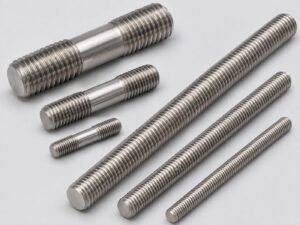
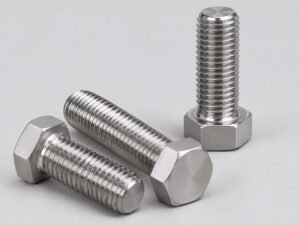
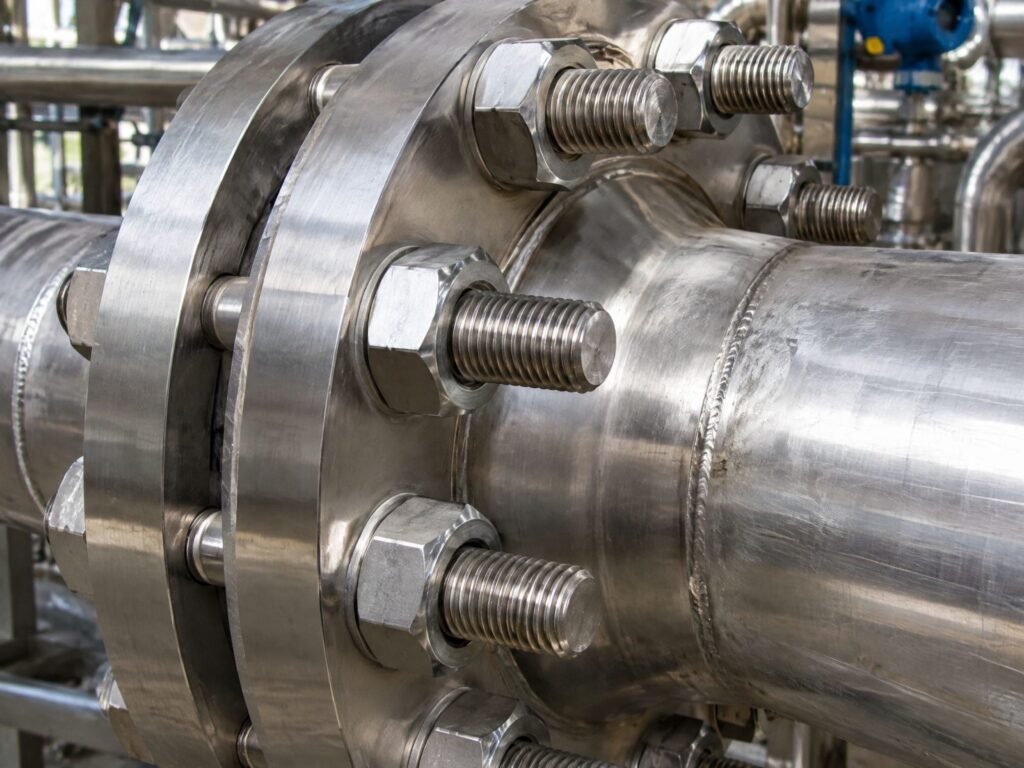
Piping flanges, pressure vessels, heat exchangers, valves and pumps all rely on threaded fasteners. The most common arrangement on flanged joints is a stud with a heavy hex nut at each end, so SS studs and SS hex nuts make up a large share of demand. Hex bolts and washers appear on supports, platforms, skids and equipment mounting, where SS hex bolts are used.
Which specifications are usually referenced?
For stainless bolting in pressure service, project specifications often cite ASTM A193 for bolting material and A194 for nuts. Within A193, B8 refers to Type 304 stainless steel and B8M to Type 316, with different classes describing the condition of the material. A194 covers the nuts that pair with that bolting. These are common references, not a universal rule. Your project, piping class or purchaser may call for something different, such as another ASTM, ISO or customer specification.
That is why the buyer must confirm what the project calls for. Do not assume that a grade name alone, such as SS 316, satisfies a pressure-service specification. The specification also covers class or strength condition, testing, marking and documents. Read our standards page for the dimensional and material standards we work with, and read the project datasheet first.
How do I choose between SS 304 and SS 316?
SS 304 suits general service where corrosion is modest. SS 316 adds molybdenum and handles chlorides and many process chemicals better, which is why it is widely used in coastal and process environments. For a quick refresher see SS 316 fasteners. Temperature, pressure and the fluid carried all affect the decision, and the design engineer, not the supplier, owns that decision.
Why do dimensional standards matter on a refinery job?
Washers, nuts and bolts must fit the flange and the equipment. Metric items are usually made to DIN or ISO, while inch series follow their own standards. For example, a plain washer to DIN 125 or a heavy-duty one to DIN 9021 is not interchangeable by guess. Our DIN 975 page explains the threaded rod standard, which is useful where studding is cut to length on site. Always state the dimensional standard with the grade.
What should I check on every order?
- Specification and grade. Write down the exact reference from the project, such as the bolting and nut specifications and the class.
- Size and thread. Diameter, pitch or threads per inch, length and nut type.
- Documents. Say upfront if you need a material test certificate. It is available on request, and you should check it against the specification when it arrives.
- Marking and packing. Ask how parts are marked and packed so they can be identified at site.
- Inspection. See our quality page for how we check parts.
Why should the buyer confirm the specification rather than the supplier?
A supplier can only quote what is asked. If the enquiry says only “SS studs, 24 mm”, several different products could fit that description, and they differ in strength condition, testing and documents. The purchaser or the project’s engineer holds the specification that governs the joint, so the safest route is to copy the exact reference from the datasheet or purchase requirement into the enquiry. If a reference is unclear, ask the design team before ordering instead of choosing the nearest match. This keeps rework and rejected material away from the job.
When you compare quotations, make sure every line names the same specification, grade and document set. A quotation that leaves out the class or the certificate is not comparable with one that includes them, and the gap usually shows up later at inspection. Keep the datasheet reference with the purchase order so the receiving team can check the delivered lot against it.
Frequently asked questions
Does SS 316 mean A193 B8M?
Not automatically. B8M refers to a 316-type material within a specific specification that also sets class, testing and marking. Confirm the full requirement from your project documents.
Can you supply studs to a drawing?
Yes, made to order to drawing or sample. Send the diameter, length, thread and grade through our custom fasteners service.
Do you give a certificate with the material?
A material test certificate is available on request. State the requirement at the enquiry stage.
Where can I find the Jamnagar details?
See our Jamnagar page for how we handle enquiries for the area.
Ready to move ahead? Send your drawing, sample or size list and request a quote. You can also call +91 89196 74214 or write to ayrssnutbolt@gmail.com, and our team will reply with the details in the quotation.