
Short answer: Use a long bolt, from about 110 mm up to 200 mm, when you are clamping thick sections, spacer plates, flanges, timber or insulation stacks, or when you need to reach through a deep assembly. Pay attention to grip length, thread length and bending, because a long bolt behaves differently from a short one.
When do you actually need a 110 to 200 mm bolt?
Long bolts are chosen when the total thickness to be clamped is large. Typical cases include thick steel plates, machine bases with packing plates, structural brackets with spacers, flanged joints with gaskets, timber or composite panels, and assemblies where the bolt passes through several layers. They are also used where the bolt has to pass through a thick insulation or lagging layer.
If the joint is short, a standard length with a nut is better. A bolt that is much longer than needed adds weight and cost, increases the chance of bending, and leaves a long tail that can snag.
How do I work out grip length and thread length?
Grip length is the total thickness of the parts being clamped, plus washers. Add the nut height and a small thread projection beyond the nut, usually at least a couple of thread pitches, to find the minimum bolt length. Round up to the next available length.
Thread length matters just as much. On partially threaded hex bolts, the unthreaded shank is the plain section and the threaded part is at the end. Ideally the plain shank passes through the clamped plates and the thread begins just inside the far plate or the nut, so that the load is carried by the stronger shank and the nut engages a full thread. If the thread runs through the whole grip, the bolt is a little more flexible and the joint can loosen more easily. On long Allen cap screws, the same thinking applies. Check the thread length for your chosen size on the product listing, and ask us if your design needs a specific thread length.
Does a long bolt bend, and how do I prevent it?
A long bolt is slender compared with its diameter, so it can bend if it is hammered in, driven at an angle or forced through poorly aligned holes. Bending also appears when the bolt is not supported and carries side loads. To reduce the risk:
- Align the holes before inserting the bolt, using a drift pin for large assemblies.
- Use a clearance hole that suits the bolt size and avoid an oversized hole that lets the bolt tilt.
- Choose a larger diameter for the longer lengths if the joint carries shear or vibration.
- Tighten gradually and use a proper spanner or torque tool, not an impact tool.
- Do not use the bolt to pull misaligned parts together.
Where the joint carries a large shear load, a long bolt is often not the best answer, and a dowel or fitted pin should take the shear while the bolt provides the clamp.
Which washers and nuts should I use with long bolts?
A flat washer under the nut, and under the head when the bolt is hex, spreads the load on the plate and protects the surface. For soft materials such as timber or thin sheet, use a larger washer. A plain nut is the standard choice; where vibration is a concern, consider a nyloc nut or a spring washer with a nut. Stainless nuts on stainless bolts can gall, so lubricate the thread and tighten smoothly; the guide to preventing galling explains how. Make sure the nut and bolt are the same grade so that corrosion behaviour and strength are matched.
What do we offer in long lengths?
Our long-length range includes long hex bolts from M8 to M24 and long Allen cap screws from M8 to M20, in lengths from 110 mm to 200 mm, in SS 304 and SS 316. See the full listing for stainless steel long length bolts. For standard lengths, browse our stainless hex bolts.
Choose SS 304 for general-purpose work and SS 316 for coastal, marine and chemical environments. Both grades are commonly supplied in the A2-70 and A4-70 property classes.
Frequently asked questions
How much thread should stick out past the nut?
A common rule is at least one to two full threads visible past the nut, so the nut is fully engaged. Do not leave a long tail unless the design needs it.
Can I cut a long bolt to length?
You can, but you will damage the thread end and may lose the corrosion-resistant finish at the cut. It is better to order the correct length. If you must cut, deburr and clean the thread.
Should I use a full-thread rod instead of a long bolt?
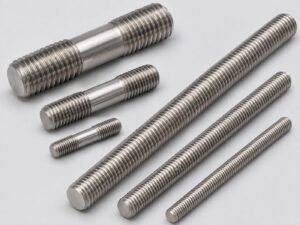
For a bolt that must be tightened with a head on one side, a bolt is easier. For a double-nut or stud-style joint, a stud may be more convenient; see our stainless studs.
Is a long Allen cap screw as strong as a hex bolt?
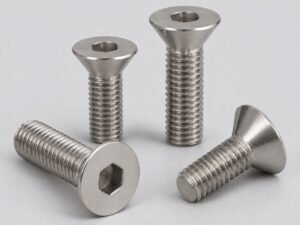
Both are suitable for clamping at the same property class. Choose by space and tool access: the cap screw fits a counterbore, the hex bolt takes a spanner or socket.
Tell us the grip length, diameter and grade, and we will help you select the right bolt. You can request a quote, call +91 89196 74214 or email ayrssnutbolt@gmail.com.