
Short answer: For most Surat dyeing, processing and chemical plants, SS 316 is the safer choice wherever fasteners sit in wet, chloride-bearing or chemically active areas, while SS 304 is usually adequate for dry machine frames and guards. The right grade depends on what actually touches the fastener, so describe the environment when you ask for a quote.
What makes fasteners in Surat dyeing and textile units fail early?
Dyeing and finishing houses are damp by nature. Fasteners are exposed to hot water, steam, salt used in dyeing, and process chemicals that can be acidic or alkaline. Mild steel rusts quickly in this setting, and zinc plating wears away. Stainless steel resists this far better because of its passive surface layer, but it is not immune. Chlorides, standing liquor trapped in crevices and washdown with aggressive cleaners can all attack a grade that was chosen without checking the conditions.
Textile machinery in dry weaving or knitting sections has a gentler life. There the main concerns are vibration loosening and corrosion from humidity, so the grade question is less demanding.
Should I choose SS 304 or SS 316 for chemical and wet areas?
Use this as a starting point, then confirm against your own process.
| Location | Usual starting choice |
|---|---|
| Dry machine frames, guards, covers | SS 304 |
| Humid sheds, general washdown | SS 304, or SS 316 where chlorides are present |
| Dye vats, tanks and pipework with chloride or acid exposure | SS 316 |
| Effluent and chemical dosing areas | SS 316, after checking the chemical |
SS 316 contains molybdenum, which improves resistance to chlorides and many acids compared with SS 304. You can read the details on our SS 316 fasteners and SS 304 fasteners pages. Some strong acids and hot concentrated chemicals attack even SS 316, so if your process uses them, check compatibility with your process engineer or the chemical supplier before ordering.
Which fastener types do Surat plants buy most?
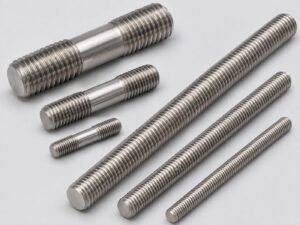
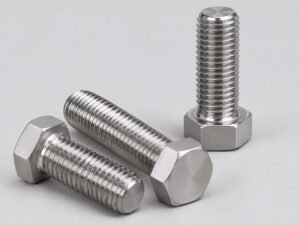
Buyers in this belt typically ask for SS hex bolts and SS hex nuts for frames, tank flanges and pipe supports, along with plain and spring washers, socket head cap screws for machine parts, and threaded rod or studs for hangers and brackets. Browse the full product range for sizes in metric and inch.
How do I reduce corrosion in assemblies, not just choose the grade?
- Keep materials consistent. Use stainless bolts, nuts and washers together, and avoid mixing stainless with plain steel in wet joints, which invites galvanic attack on the steel.
- Avoid crevices where liquor collects. Design drainage into the joint where possible, and rinse after cleaning cycles.
- Prevent galling. Stainless nuts and bolts can seize when tightened dry. Tighten steadily rather than at high speed, and use a suitable anti-seize or lubricant if your process allows it.
- Specify the right strength. Stainless property classes under ISO 3506 are lower than high-tensile carbon steel, so do not assume a stainless bolt replaces a heavy structural one one-for-one.
What should I give the supplier when I order?
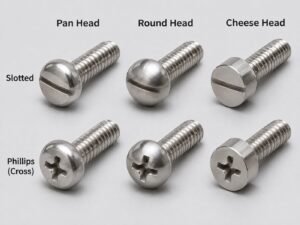
Send the grade you want, the standard (DIN, ISO or BS), diameter, length, thread pitch, head type and quantity. If a material test certificate is needed for your records, ask for it on the enquiry. Our standards page lists the commonly requested specifications, and our quality page explains how parts are checked. For worn or non-standard parts, send a drawing or sample and we can make to order through our custom fasteners service.
If you are sourcing for a plant in or around the city, see our Surat page for the area we serve and how to place an enquiry.
How often should wet-area fasteners be checked?
Treat fasteners in dye houses and chemical areas as part of routine maintenance rather than fit-and-forget items. Look for rust-coloured staining, pitting, weeping around joints and threads that no longer turn smoothly. Staining on stainless steel is often a surface problem that can be cleaned, but pitting or cracking means the grade or the design needs another look. Replace damaged fasteners as a set, with matching nuts and washers, and record the grade used so the next purchase repeats what worked.
It also pays to keep a short list of the sizes your plant uses most, with the grade and standard noted beside each. When a breakdown happens, a clear list shortens the enquiry and avoids guesswork.
Frequently asked questions
Is SS 304 enough for a Surat dyeing unit?
It can be for dry or lightly damp areas. Where fasteners meet chlorides, process liquor or acidic cleaning agents, SS 316 gives a larger safety margin.
Can stainless fasteners still rust?
Yes, under some conditions. Chlorides, crevices, contamination from carbon steel tools and the wrong grade can all cause staining or pitting. Correct grade selection and clean handling reduce the risk.
Do you supply SS 202?
We do. SS 202 is a lower-cost stainless grade suited to dry, non-critical use, and it is generally not recommended for wet or chemical areas.
Can you make non-standard fasteners?
Yes, to drawing or sample. Share dimensions, grade and quantity so the quotation can be accurate.
Ready to move ahead? Send your drawing, sample or size list and request a quote. You can also call +91 89196 74214 or write to ayrssnutbolt@gmail.com, and our team will reply with the details in the quotation.