Short answer: Use a self-drilling screw when you want to drive straight into thin sheet metal without a separate drilling step. Use a self-tapping screw when you can drill a pilot hole first and want a cleaner, more controlled thread in the material. Stainless self-drilling points are best kept to thin sheet and soft substrates, so check the base material before you choose.
What is the real difference between self-drilling and self-tapping screws?
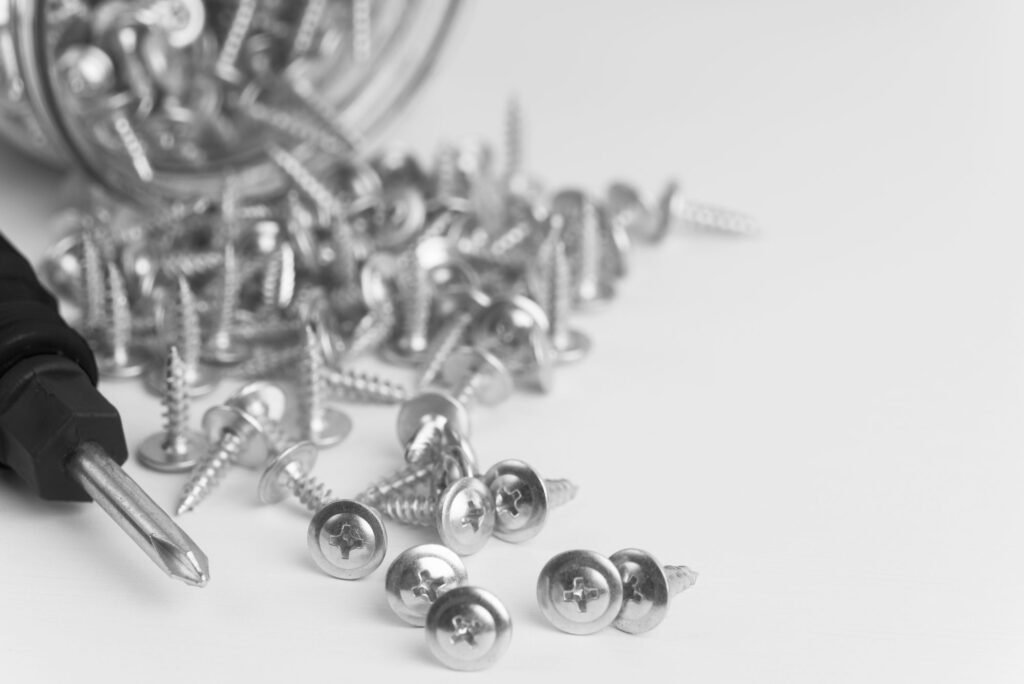
A self-tapping screw has a sharp or blunt thread that cuts or forms its own mating thread, but it needs a hole that already exists. A self-drilling screw adds a drill-shaped point, so it drills its own hole and then taps the thread in a single operation. Both are used to join sheet metal, panels, brackets and enclosures where a nut on the back is not practical.
In short: self-tapping saves the tapping step, and self-drilling saves both the drilling and the tapping step. That convenience on a site or a production line is the main reason buyers choose self-drilling, while self-tapping is chosen when hole position and hole quality matter more.
Do I need to drill a pilot hole?
With a self-tapping screw, yes. The pilot hole should be slightly larger than the root (core) diameter of the screw thread, so the thread has material to bite into without overloading the screw. A hole that is too small can twist off the screw head or the shank, and a hole that is too large gives a weak grip. A trial hole in an offcut of the actual sheet is the safest way to confirm the drill size.
With a self-drilling screw, no pilot hole is needed. The point does the cutting. The limit is the capacity of the point: it can only drill a certain thickness before the flutes of the drill point end and the thread starts to engage. If the sheet is thicker than the drill point can clear, the thread will jam on the unfinished hole.
How thick can the sheet metal be?
Thickness is the deciding factor, and it is where most wrong orders come from. Self-drilling screws are intended for thin sheet. The drilling capacity depends on the point style and screw size, so always match the screw to the total thickness being drilled, including both layers when you are joining two sheets. A stainless drill point works best on thin gauge steel, aluminium and similar soft sheet. It is not suited to drilling into thick or hard structural steel; for that situation, drill and tap in the usual way and use a self-tapping or machine screw instead.
Self-tapping screws are more forgiving, because the hole is already made. As long as the pilot hole is correct, they can be used in a wider range of sheet and plate thickness, within the limits of the screw strength.
Which sizes and grades do we supply?
Our range covers both types in stainless steel:
- Self-tapping screws, SS 304: 2.9 mm (#4) up to 6.3 mm (#14).
- Self-tapping screws, SS 316: 3.5 mm (#6) up to 6.3 mm (#14).
- Self-drilling screws, SS 304 (A2): 3.5 mm (#6) up to 5.5 mm (#12).
Choose SS 304 for general indoor and outdoor use. Choose SS 316 where there is chloride exposure, such as coastal sites, marine fittings or washdown areas. You can see the full range on our stainless steel self-tapping screws page.
Which head style should I pick?
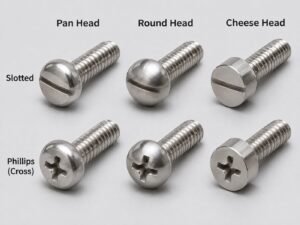
The head decides the look of the joint and how the load is spread. Pan head is the general-purpose choice and sits proud of the surface with a wide bearing area. Countersunk (flat) head sits flush, which is useful where a cover or mating part must slide over the screw. Hex head allows higher driving torque with a socket or nut driver, and it is common on self-drilling screws because drilling needs firm end pressure. Pick the drive style your tool can hold under load, since a worn or mismatched driver bit is a common cause of damaged heads.
If your joint is going to be taken apart often, a machine screw into a tapped hole or a nut will give a longer service life than a self-tapping screw. See stainless machine screws for that alternative.
Frequently asked questions
Can I use a stainless self-drilling screw on thick steel?
Not reliably. These screws are meant for thin sheet. For thick or hard steel, drill and tap the hole first, or use a bolt with a nut, rather than relying on a stainless drill point.
Why did my self-tapping screw snap?
The usual causes are a pilot hole that is too small, too much driving speed that heats the stainless steel, or over-torquing. Stainless work-hardens, so drive at moderate speed with steady pressure.
Can self-tapping screws be reused?
They can be removed and refitted a few times, but the formed thread wears. For joints that are opened often, use a nut or a tapped hole with a machine screw.
Does the screw grade matter if the sheet is mild steel?
Yes. Mixing stainless fasteners with unprotected mild steel can leave rust staining around the joint. Match materials where appearance and corrosion matter, and see our guide to preventing galling for good driving practice in stainless.
Tell us your sheet material, total thickness and exposure, and we will help you pick the screw. You can request a quote, call +91 89196 74214 or email ayrssnutbolt@gmail.com. You can also browse all stainless fasteners.