Short answer: Check the head marking first: A2 usually indicates the 304 family and A4 the 316 family, followed by a strength class such as 70 or 80. A magnet cannot prove the grade. Only a chemical analysis can, and the supplier’s material test certificate is the document to ask for.
What do the markings on a stainless steel bolt head mean?
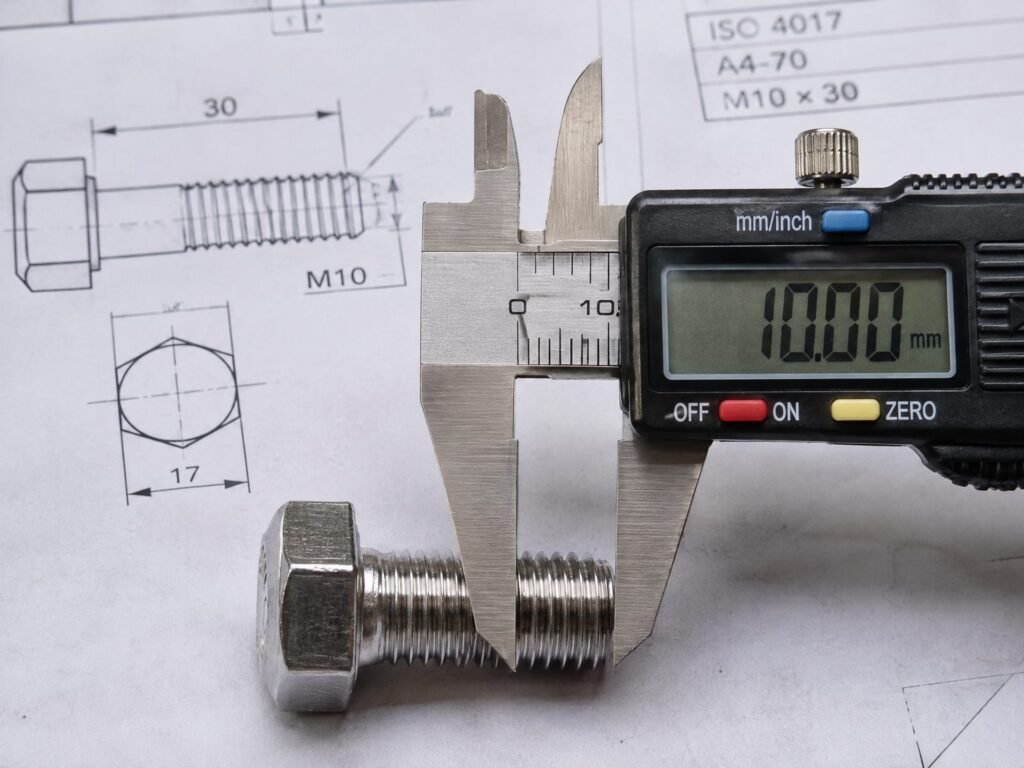
Metric stainless fasteners are normally marked under the ISO 3506 system. A typical head stamp reads something like A2-70 or A4-80, plus the manufacturer’s mark. The parts mean:
- A2: an austenitic stainless steel, in practice most often SS 304 or a close equivalent.
- A4: an austenitic stainless steel containing molybdenum, in practice most often SS 316 or a close equivalent.
- 70: a property class with a minimum tensile strength of 700 MPa.
- 80: a property class with a minimum tensile strength of 800 MPa.
- Manufacturer mark: identifies who made the bolt, which helps trace it.
Note that A2 and A4 describe a family of steels, not one exact grade, and the markings tell you nothing about the actual batch chemistry. Small bolts, countersunk heads and many screws are often too small to carry a full stamp, and some bolts carry no marking at all, so a missing mark does not tell you the grade either.
Can I identify SS 304 or SS 316 with a magnet?
A magnet is a quick screening tool, nothing more. Austenitic stainless steels such as 304 and 316 are generally non-magnetic or only very weakly magnetic in the annealed state. So if a bolt is strongly attracted, it is likely to be a ferritic or martensitic grade, or a plated carbon steel bolt, rather than a true austenitic one.
The limits are important:
- Cold working during thread rolling or forming can make 304 and 316 slightly magnetic, so a mild pull does not mean the bolt is fake.
- A bolt that is not magnetic is not necessarily stainless, and a magnet cannot tell you the difference between 304 and 316.
- Both 304 and 316 behave in a very similar way near a magnet, so the test cannot prove which you hold.
How can I really confirm the grade?
The only reliable way to know the grade is to measure the chemistry. Two routes are common:
- Laboratory or on-site analysis: methods such as optical emission spectrometry or a handheld XRF analyser read the alloying elements. The key difference is molybdenum, which is present in 316 and absent or negligible in 304. Handheld analysers are quick for screening, and a laboratory report is the stronger evidence.
- Material test certificate: the supplier’s certificate records the chemical composition and mechanical properties of the lot the parts came from. Its value depends on being traceable to the batch, so the heat or lot number on the certificate should match your delivery.
Spot checks on a delivered sample are a good habit for critical applications, and you can read how we approach inspection on our quality page.
What should I request on a purchase order?
Put the identification requirements in writing so there is no room for doubt later. A good order includes:
- the grade by name, for example SS 304 or SS 316, not just “stainless”;
- the standard, such as DIN, ISO or BS, and the ISO 3506 property class, such as A2-70 or A4-80;
- the head marking required, including the manufacturer’s mark;
- a material test certificate for each lot, with batch or heat number traceability;
- any third-party testing you want, with the sampling plan agreed in advance.
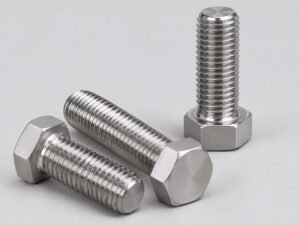
If you are unsure which grade suits the job, our grade selection support can help, and you can compare the SS 304 and SS 316 pages. For nuts and bolts, see SS hex bolts and the overall product range.
Frequently asked questions
Is A2 the same as SS 304?
A2 is the ISO 3506 steel group that SS 304 falls into, so A2 fasteners are commonly made from 304. The marking does not guarantee the exact composition of your batch, which is why the certificate matters.
Is A4 always SS 316?
A4 is the molybdenum-bearing group, and SS 316 is the grade normally supplied in it. Confirm it through the test certificate when the grade is critical.
Does a bolt marked 70 or 80 mean it is stronger because it is 316?
No. The number is the strength class, and the letter is the steel family. They are independent. A2-70 and A4-70 share the same minimum tensile strength.
Why might a stainless bolt stick to a magnet?
Cold forming can induce weak magnetism in austenitic grades. A strong pull, though, can point to a different or plated steel, so check the certificate or test the chemistry.
Need documents with your order? Add the requirements to your enquiry and request a quote, or call +91 89196 74214, or email ayrssnutbolt@gmail.com.