Short answer: Gujarat is not one market for fasteners. Chemical and dyeing belts lean towards SS 316, machinery and engineering belts mostly work well with SS 304, and coastal refining zones need extra care with chlorides. Match the grade to what touches the fastener, not just to the city.
How does the Gujarat corridor differ from belt to belt?
Gujarat’s industry runs along a long corridor, and each belt has a different dominant process. That changes the environment each fastener faces, so the right grade changes too. The sections below give a typical pattern, which you should verify against your own plant. Our main Gujarat supply page covers the state overall.
What does each belt typically need?
| Belt | Typical industry | Usual grade direction |
|---|---|---|
| Ahmedabad | Chemicals, pharma, textiles, general engineering | SS 316 for process areas, SS 304 elsewhere |
| Vadodara | Process equipment, chemicals, heavy machinery | SS 316 for wet or chemical duty, SS 304 for structure |
| Surat | Dyeing, textile processing, chemical units | SS 316 in wet and chloride areas |
| Rajkot | Machinery, pumps, engineering components | SS 304 mostly, SS 316 for wet duty |
| Jamnagar | Refining, brass and coastal engineering | SS 316, with care for chlorides and temperature |
For detail on each city, see our pages for Ahmedabad, Vadodara, Surat, Rajkot and Jamnagar.
How should I choose a grade for my belt?
Start with the environment around the fastener, then the load and the documentation you need.
- Dry, indoor, structural: SS 304 is generally adequate and economical.
- Wet, chemical, chloride or coastal: SS 316 gives better resistance because of its molybdenum content.
- Light indoor duty only: SS 202 can be considered, but it is weaker against corrosion than 304.
Be careful with strong acids, hot concentrated chemicals and high temperatures, as they can attack even SS 316. Confirm compatibility with your process engineer or chemical supplier.
What should chemical, process and machinery buyers watch for?
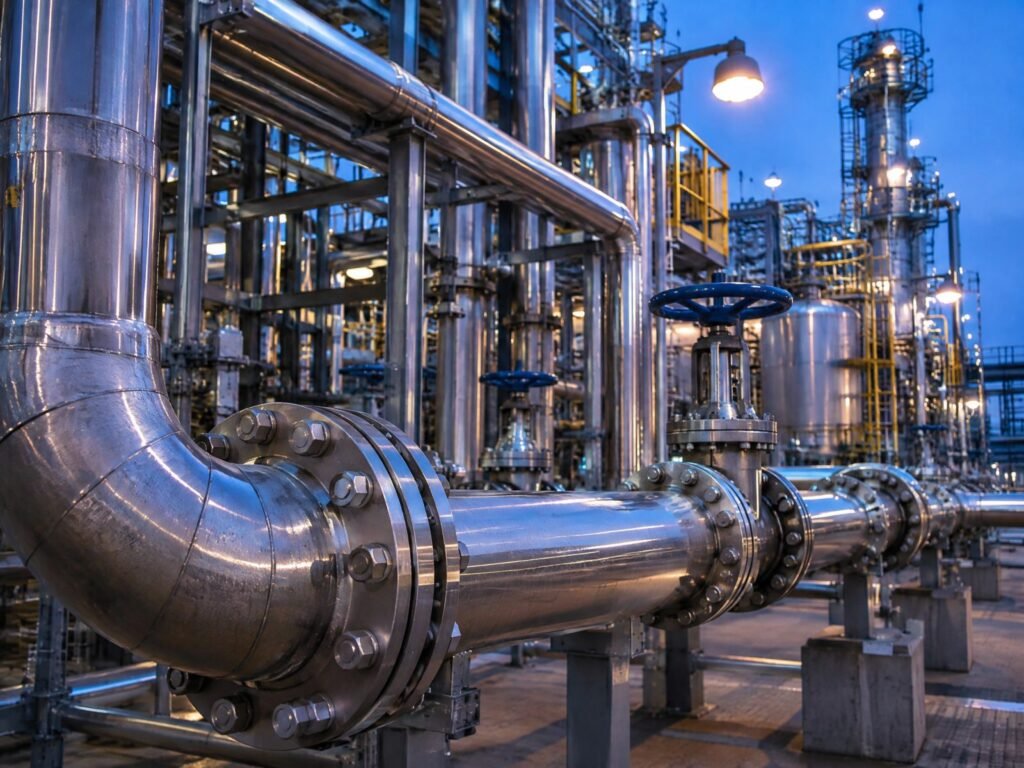
Chemical and process plants should list the actual media, concentrations and temperatures. Washdown and trapped liquid in crevices are common causes of early failure, so look at joint design as well as grade. Machinery makers in engineering belts should think about thread galling: stainless threads can seize when tightened dry, so use suitable lubricant and moderate tightening. Refining and coastal users should treat salt-laden air as a chloride exposure and lean towards 316.
Across all belts, stainless fasteners are generally lower in strength than high-tensile alloy steel. If your joint is heavily loaded, check the required property class with your design engineer.
Which fastener types are in demand across the corridor?
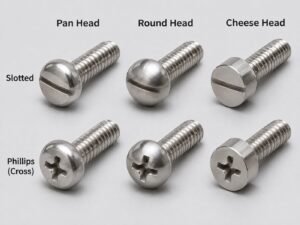
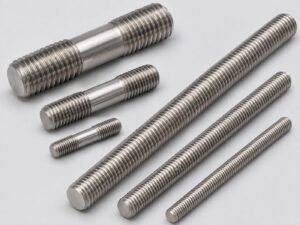
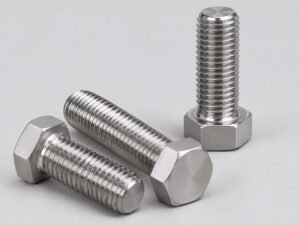
Typical requests include SS hex bolts, SS hex nuts, SS studs for flanged connections, washers, socket screws and threaded rod. We supply metric and inch sizes to DIN, ISO and BS, and can make non-standard parts to drawing. The full product range shows what is available, and our standards and quality pages explain the specification and checks.
How do I get a correct quote from anywhere in Gujarat?
- Say which belt or plant type you are in and what the fastener touches.
- Give size, length, thread, grade and standard, or attach a drawing.
- State whether you need a material test certificate and export-grade packing.
- Describe any special finish or marking.
Why do state-wide buyers need one consistent specification?
Companies with plants or projects in more than one Gujarat belt often end up with different specifications at each site, which complicates purchasing and spares. A single master specification, with a clear rule for each environment, avoids this. For example, define one rule for dry indoor locations, one for wet or chemical areas and one for coastal or outdoor exposure, then list the grade, standard and finish for each. Purchase teams can then order for any site without redoing the analysis, and maintenance teams know exactly what replacement parts to fit.
Update the specification when a process changes, since a new chemical or washdown routine can move an area from one category to another.
Frequently asked questions
Is SS 316 needed everywhere in Gujarat?
No. It is most valuable in wet, chemical, chloride and coastal conditions. Dry indoor structures often do well with SS 304.
Which belt needs the most corrosion resistance?
Dyeing, chemical and coastal refining areas usually place the highest demands on a fastener, but always check the specific process.
Can you supply special sizes?
Yes. We make fasteners to drawing in SS 304, 316 and 202, in metric and inch sizes.
Do you supply for export orders from Gujarat?
Yes. Export packing is available, and a material test certificate can be provided on request.
Send us your drawing, grade and quantity details and we will respond with a proper offer. You can request a quote, call +91 89196 74214 or email ayrssnutbolt@gmail.com.