
Short answer: SS 316 bolts cost more than SS 304 mainly because SS 316 contains molybdenum and usually more nickel, and both are expensive alloying metals whose cost moves with the raw material market. The extra cost is worth paying where chlorides, salt or aggressive chemicals are present. Indoors or in mild conditions it is often wasted.
Why do SS 316 bolts cost more than SS 304?
Both grades are austenitic stainless steels, and both contain chromium and nickel. The difference is in the recipe. SS 316 adds molybdenum, and it also carries a higher nickel content than SS 304. Molybdenum is what improves resistance to pitting and crevice corrosion in chloride environments.
Those two elements are the cost driver:
- Raw material: nickel and molybdenum are traded commodities. When their market price rises, the price of the steel rises with it, and the gap between the two grades can move from one quote to the next.
- Melting and supply: molybdenum-bearing steel is made in smaller volumes than the very widely used 304, which can also affect availability of particular sizes and bar forms.
- Handling: 316 is generally a little tougher to cold form and machine, which can add some manufacturing effort for larger or special parts.
This is why we quote each enquiry against current material rates rather than publish a fixed difference. For a closer look at each grade, see our pages on SS 304 fasteners and SS 316 fasteners.
In short, you are not paying for a brand or a finish. You are paying for alloy content that gives a longer working life in the right environment, and the difference only shows up when that environment is harsh.
When is the SS 316 premium worth paying?
The premium is justified when failure or replacement is costly and the environment attacks stainless steel. Typical cases include:
- Marine and coastal use: salt spray, harbour equipment, boat fittings and structures close to the sea.
- Chloride exposure: swimming pool areas, de-icing salts, bleach-based cleaning and some process water.
- Chemical and pharmaceutical plants: where acids, solvents or frequent washdowns are part of daily operation.
- Food and dairy processing: where hygiene chemicals are used regularly.
- Hard-to-reach joints: if a corroded bolt would mean shutting down a line to replace it, the extra material cost is small next to that downtime.
When is SS 316 wasted money?
SS 304 performs very well in a large range of everyday conditions. You are probably paying for performance you will not use when:
- the fastener is used indoors in a dry, clean environment;
- the application is general fabrication, furniture, enclosures or light machinery;
- the exposure is rain and normal atmosphere, away from the coast and away from chemicals;
- the part is temporary or easily replaced.
It is also not an automatic upgrade for strength. Fasteners in the same property class, such as A2-70 and A4-70, have the same minimum tensile strength, so choosing 316 does not make the bolt stronger.
A useful way to think about it is total cost over the life of the joint. A cheaper bolt that has to be replaced, or that stains and fails an inspection, is not cheaper in the end. Equally, using 316 everywhere out of habit adds cost without adding life.
What checklist should I use to choose between 304 and 316?
- Will the bolt be near the sea, a pool, de-icing salt or any chloride source? If yes, lean towards 316.
- Will it meet acids, bleach, solvents or frequent chemical cleaning? If yes, lean towards 316.
- Is the joint difficult or costly to reach again? If yes, lean towards 316.
- Is the environment dry, indoor or mild? If yes, 304 is usually enough.
- Are mating parts made of 316 or 304? Match grades to keep the assembly consistent.
- Is the failure consequence safety-critical? If so, confirm the grade with a technical review and do not decide on price alone.
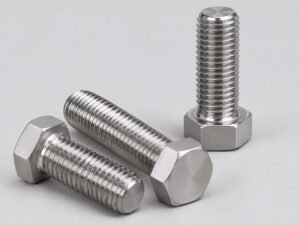
If your answers are mixed, our team offers grade selection and technical support, and you can browse the range of SS hex bolts in both grades.
Frequently asked questions
Does SS 316 rust?
It resists corrosion much better than 304 in chloride conditions, but no stainless steel is immune. Poor design, trapped moisture and contamination can still cause staining or crevice attack.
Can I mix 304 and 316 fasteners in one assembly?
They are close in the galvanic series so corrosion between them is rarely a problem, but a 304 fastener in a 316 assembly can become the weak link in a harsh environment. It is better to use one grade throughout.
Is SS 316 available in the same sizes as 304?
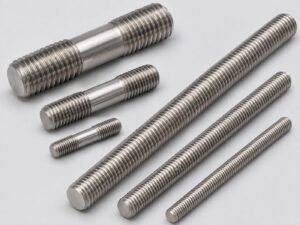
Generally yes. We supply both grades in bolts, nuts, washers, screws and studs, in metric and inch sizes, to DIN, ISO and BS standards.
Can you prove the grade I receive?
A material test certificate is available on request, which records the chemical composition of the batch. Please ask for it when you place the order.
Not sure which grade your project needs? Tell us the environment and size list and request a quote for both options, or contact us on +91 89196 74214 or ayrssnutbolt@gmail.com.