
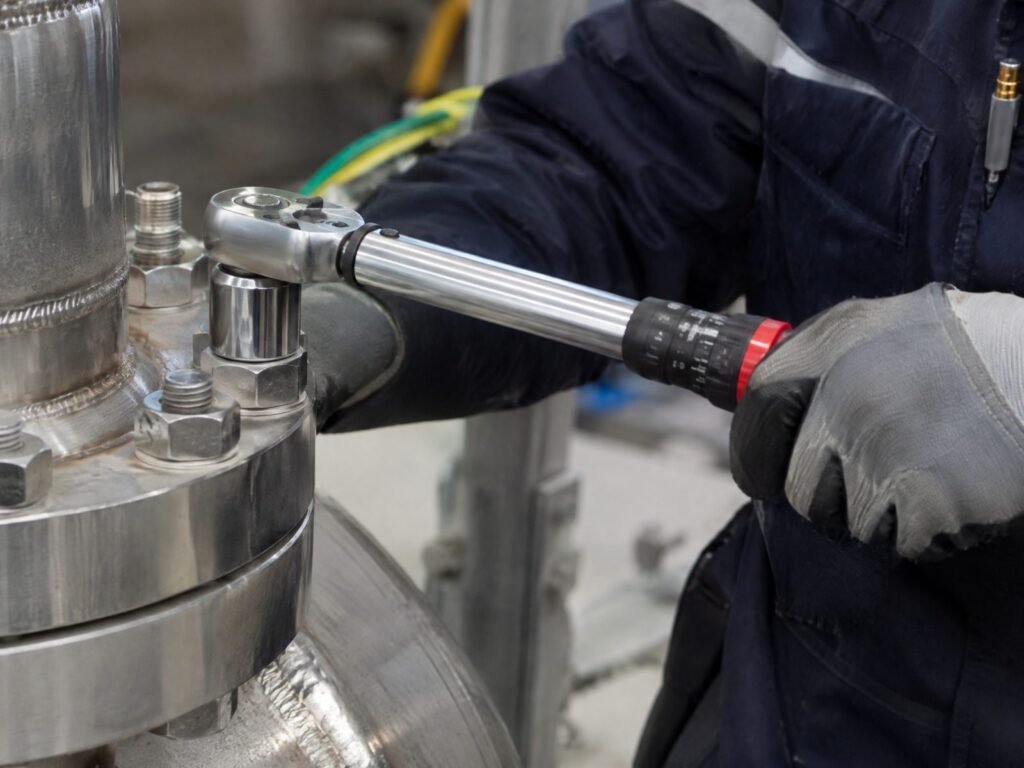
Short answer: Use an anti-seize or lubricant on stainless steel threads to prevent galling, where the thread surfaces cold-weld and seize. Apply a thin, even coat to clean threads, tighten slowly, and reduce your torque value, because a lubricated thread turns the same bolt tighter at the same torque.
Why do stainless steel fasteners seize?
Stainless steel forms a thin oxide film. When a nut is tightened under pressure and speed, friction and heat tear this film and the clean metal surfaces weld together. The thread then locks or tears, a failure called galling. It is most common on austenitic grades such as SS 304 and SS 316 when the same material runs against itself. Our technical data page covers thread basics.
What lubricant should you use on stainless steel fasteners?
Choose by temperature, environment and the need to avoid contamination. Common choices are:
| Type | Typical use | Notes |
|---|---|---|
| Nickel-based anti-seize | High temperature, marine, chemical | Widely used on stainless; check it is rated for your temperature |
| Molybdenum disulphide paste | General, heavy load | Good at reducing friction; check compatibility with the environment |
| Copper-based anti-seize | High-temperature, mixed metals | Check the manufacturer’s advice for stainless, especially where galvanic action is a concern |
| PTFE-based or white grease | Food, pharma, clean areas | Choose products approved for the application |
| Light oil | Occasional use, low load | Evaporates or washes away; less protection |
Always read the product data sheet. For food, pharma or oxygen service, use only lubricants approved for that duty. Some products contain chlorides or sulphur that can attack stainless in sensitive settings, so confirm before use.
How do you apply anti-seize correctly?
- Clean the threads of dirt, oil and old compound.
- Apply a thin, even coat to the bolt threads, not a thick glob.
- Also coat the contact face under the nut head if the manufacturer advises it.
- Thread the nut on by hand first to check the fit.
- Tighten slowly with steady pressure. Fast impact tools build heat and cause galling.
- Do not let the compound get into holes where it should not be.
How does lubrication change tightening torque?
Lubrication cuts friction, so the same torque produces a higher clamp load. If you use a torque chart written for dry threads and then add anti-seize, you can overload the bolt. Reduce the torque value according to the compound’s friction (nut factor) data and your design requirements. Confirm values with your engineer, since the right figure depends on grade, property class, size and lubricant.
What other steps prevent galling?
- Use slower tightening speeds and avoid impact wrenches.
- Keep threads clean and undamaged.
- Mix grades where the design allows, for example a bolt and nut of different grades or hardness, after checking corrosion compatibility.
- Choose rolled, well-finished threads with accurate fit.
- Use washers to cut friction under the nut, such as plain washers.
- Do not over-tighten.
Should you lubricate every stainless fastener?
Not always. Lubricate when threads will be tightened heavily, reused, exposed to heat, or exposed to corrosion that could lock them. For light, one-time assemblies in dry conditions, galling risk is low. If you plan to remove and refit often, anti-seize is worth the small extra step. See our hex nuts for matched sets.
Does anti-seize stop corrosion?
It can slow corrosion by keeping moisture out of threads, but it is not a corrosion treatment. Compounds can wash out over time. In marine or chemical settings, selecting the correct grade, such as SS 316, matters more than relying on a coating of paste.
Which tightening method works best for stainless threads?
Steady, controlled tightening works best. A hand torque wrench or a low-speed driver lets the lubricant film do its job. High-speed impact tools generate heat at the thread flanks, which is the main trigger for galling. When you are installing many fasteners, work in a consistent pattern and stop if you feel the thread binding. Forcing a binding nut often destroys both the nut and the bolt, so back it off, clean the threads and try again with fresh compound.
How should you store and reuse lubricated fasteners?
Keep stainless fasteners clean and dry before assembly, since dirt in the thread works like grit and encourages galling. Wipe off old compound before reusing a bolt and apply fresh anti-seize, because used paste may be contaminated or dried out. If the thread shows scoring or pick-up of metal, replace the part. Store compounds with the lid closed and avoid mixing different types on the same joint unless the maker says it is safe.
What mistakes should you avoid with anti-seize?
- Using too much paste, which squeezes out and attracts dirt.
- Applying a torque value meant for dry threads.
- Choosing a compound without checking its chloride or sulphur content for sensitive service.
- Using the same lubricant in food areas as in a workshop.
- Skipping lubrication on heavily loaded or heated joints because the parts look clean.
- Mixing old and new compound on a reused thread.
Key takeaways
- Galling happens when stainless threads cold-weld under friction and pressure.
- Apply a thin coat of suitable anti-seize to clean threads.
- Tighten slowly and avoid impact tools.
- Reduce torque values when lubricating, and confirm them with your engineer.
- Use lubricants approved for food, pharma or other special duty.
Ready to source? Send your grade, size, standard and quantity through our enquiry page, and we will confirm availability, standards and the documents we can provide before you order. You can also call +91 89196 74214 or email ayrssnutbolt@gmail.com.
Frequently asked questions
Is light oil enough instead of anti-seize on stainless bolts?
Light oil gives only short-term protection because it evaporates or washes away. For threads that are tightened heavily, reused, exposed to heat or likely to corrode, a proper anti-seize compound is better. Check the product data sheet for suitability to your environment.
Do I need to reduce torque when I use anti-seize?
Yes. Lubrication reduces friction, so the same torque produces a higher clamp load and can overload the bolt. Reduce the value using the compound's friction data, and confirm the figure with your engineer, since it depends on grade, class, size and lubricant.
Which lubricant is suitable for stainless fasteners in food or pharma areas?
Use only lubricants approved for that duty, such as PTFE-based products or white grease where the data sheet allows. Some compounds contain chlorides or sulphur that can attack stainless in sensitive settings, so confirm compatibility before use.
Why do stainless nuts seize when I use an impact wrench?
Fast tightening builds friction and heat that tear the thin oxide film, so the thread surfaces cold-weld together, which is called galling. Tighten slowly with steady pressure, keep threads clean, and consider anti-seize to reduce the risk.
Often yes. Austenitic stainless threads can gall and seize, especially under heavy load, heat or fast tightening. A thin coat of suitable anti-seize on clean threads reduces friction and makes later removal and reuse of the fastener much easier.
It depends on temperature and environment. Nickel-based and molybdenum-based compounds are common on stainless fasteners, while food and pharma areas need approved products. Check the product data sheet for compatibility with your grade, operating temperature and conditions.
Yes. Lubricated threads have less friction, so the same torque gives more clamp load and can overload the bolt. Use a torque value adjusted for lubricated threads, based on grade, property class, size and compound data, and confirm it with your engineer.
Galling is a form of wear where thread surfaces cold-weld together under pressure and friction, causing the nut to seize or the thread to tear. Lubricant, slow tightening, clean undamaged threads and avoiding impact tools all help prevent it, and it is most common on austenitic grades.