It is tempting to apply carbon steel torque charts to stainless steel bolts. That can lead to stripped threads, galling or an under-tightened joint. Stainless is different in three important ways.
1. Lower strength classes
The common stainless property classes, A2-70 and A4-70, have a lower minimum tensile strength (700 MPa) than high-strength carbon steel bolts. The allowable torque is therefore lower.
2. Higher friction
Stainless threads have higher friction and are prone to galling. More of the applied torque is lost to friction, so the clamp load per unit of torque varies widely.
3. Lubrication changes everything
Adding anti-seize lowers friction dramatically. The same torque with lubricated threads produces much more clamp load. Always use torque values published for the actual lubrication condition.
How to set torque correctly
- Use a torque table for the correct property class (for example A2-70 or A4-80).
- State whether threads are dry or lubricated.
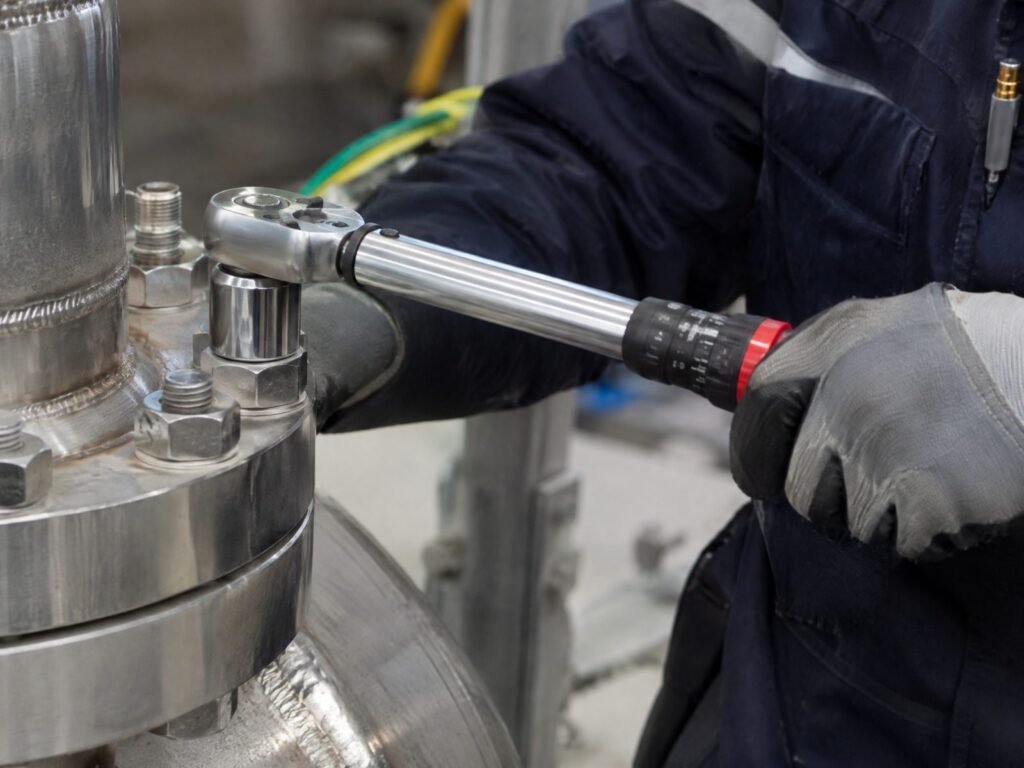
- Tighten smoothly and slowly with a calibrated wrench.
- For critical joints, verify with tension measurement or follow your engineering specification.
This article is general guidance only. For safety-critical joints, follow the design engineer’s specification. Browse our stainless steel fasteners or ask our team for help selecting the right property class.